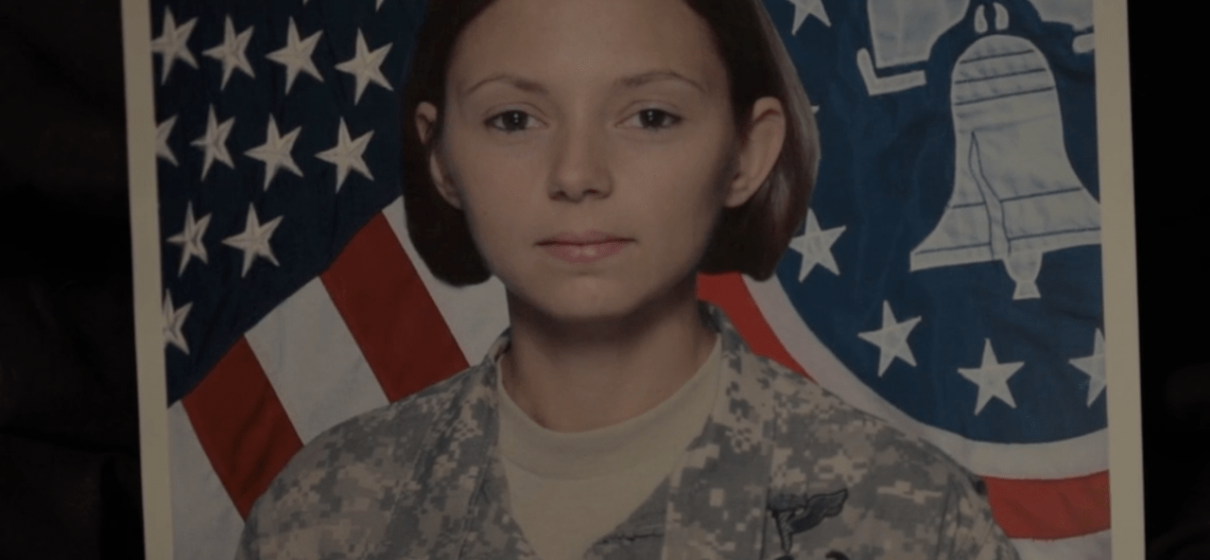
There I was in the Middle East, wearing a camouflage uniform,
carrying a 9 mm handgun—a successful U.S. Army officer whose accomplishments
were pinned to her uniform.
As a young child I grew up in a home that was just broken.
It was filled with domestic violence, alcohol, [and] drugs. And from an early
age, I decided I wasn’t going to rely on anybody else, I didn’t need anybody
else, that I could just do it on my own. You know, I went to college at first,
and then I joined the Army, all to show that I didn’t need anybody else.
I really had the idea of becoming a general as my ultimate goal,
because once you reach that level, I felt like you had made it. And I wanted people
to go “wow, you did what?” I was really looking for that approval from others,
that I was accomplished and I had done well for myself.
So, as I met my husband, Ryan, and we had begun dating, I quickly realized that I was going to have some decisions to make because he wanted a family and I knew deep down that I was never going to be able to balance both. I just knew my heart, that I was going to continue to strive at my job, and that I would probably not balance that well and my family would suffer. So, for me it was going to be a decision, and how to make that work. I kind of had this idea of motherhood that it was going to be something that I was going to accomplish and I was going to be really good at, because in my past I had always done well, I was always at the top of my peers. And so, when Everly came, it was kind of earth-shattering for me because I wasn’t—I wasn’t perfect. I wasn’t meeting all of these accomplishments, or these things that people said I should be doing.
I quickly was thrown into postpartum depression, not only
because kids are hard, but also because no one applauds you or gives you a gold
star for being a mom. So, I struggled with that. And I found myself, at times,
I would meet other people, and they’d go “oh, what do you do?” And I would say,
“Oh, well I stay at home now, but I used
to…” and then I’d throw in an accomplishment that I had from the Army.
Looking back at that, it really makes me sad because I wasn’t
identifying as a mom; I wasn’t holding value to that.
Unfortunately, I wish I could say that this is struggle that
I can say that I’m done with, but it’s not. It’s something I struggle with
every day. And when I see a peer get promoted on social media, or I see photos
of this life I used to lead and was very accomplished in, it’s hard. I’m angry
about it, I get envious that I’m not getting to do that. Instead, I have these
two little blonde girls telling me what to do. You know, it’s tough. And, I
think I always have to remember that I’m not called to this job, I’m not called
to that job–I’m really called to be a follower of Christ.
Making the decision to stay home versus working full-time,
it made me realize that one isn’t more important than the other as I had
earlier thought. Staying home doesn’t mean you’re less awesome, or you’re less
important. There’s not a sliding scale of who you are as a person dependent on
where you are.
For me, I’ve realized that truly my identity is in Christ,
and that’s what I should focus on—to look to him for my strength, and look to
him for my being accepted because he’s the one that truly loves me. My identity is truly in Christ, and
not in motherhood, and not in a job, and not in the day-to-day. He’s more concerned
with the way I live my life than a job that I’m holding.
https://clearcreekresources.org/wp-content/uploads/2019/06/accom23423.png8601280Clear Creek Resourceshttps://clearcreekresources.org/wp-content/uploads/2025/01/CCResources-1-300x74.pngClear Creek Resources2019-06-18 14:21:572020-04-23 21:09:00Accomplish: The Tasha Thomas Story
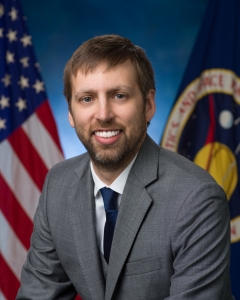
Growing up on a farm in northeast Kansas bolstered Nate Fisher with good morals, a hard work ethic, and some spiritual understanding, as his mom regularly took him and his sister to church in the small town nearby.
Official NASA Portrait for Flight Dynamics Division (CM) – Nate Fisher. Photo Date: July 11, 2018. Location: Building 8, Room 183 – Photo Studio. Photographer: Robert Markowitz
“What I took away from my family was that to get through life, you want to be a productive person and not a weight on society and culture,” 33-year-old Nate said.
Nate also lived by the idea that while you are working to provide for yourself, you should also treat your neighbors well. To an extent, Nate believed that if he treated others well, then they would approve of him and, in turn, treat him well, and that all of this would lead to happiness in life.
Instead it led to a chaotic life with sporadic highs and crushing lows that included depression.
“My self-value was anchored in my performance at work and my perception of what others thought about me,” Nate said.
But that anchor didn’t hold.
As a kid, Nate was always interested in science. With hopes of becoming an astronaut, he pursued an engineering degree at Kansas State University. However, as he studied science, he found it difficult to reconcile the latest theories—how old the universe is, what stuff it is made up of, how our solar system came to be—with the Bible stories he had heard about growing up.
“When I came to college, I started drifting away from any kind of religious values that I did have. I perceived religious people to be very two dimensional, always putting on a happy-go-lucky persona, and whitewashing all the bad things in the world.”
Nate’s vision in life was to finish college, get an internship, and get a job. Towards the end of his college career, he landed himself a multi-semester internship with NASA Johnson Space Center, which then led to a post-college job offer. Once he got the job, his focus then became working hard and saving up money for retirement. But his flight operations job was very competitive and, while he wasn’t the bottom performing person, he also wasn’t the top performer. Once again, he had to prove his worth and gain other people’s approval through his performance. After finally passing his first certification, Nate’s immediate future seemed secure. But all his hard work didn’t pay off with the contentment he’d hoped for. All the while, Nate was slipping further into depression.
“I remember sitting at my desk at the house I was renting and realizing, So I’ll work for a while. Maybe I’ll get married, maybe not. I’ll eventually retire. Maybe I’ll move back to Kansas, maybe not. I’ll keep hanging out with friends, and then I’ll die, and the universe will continue to exist without me.And I remember thinking, Wow. That really sucks. What’s the point of all this suffering? Sometimes you’re happy, but most of the time you’re not. What’s the point of all of this? It just seemed like a gigantic waste of time.”
PHOTO DATE: 02/27/2018 LOCATION: Bldg. 30 – FCR-1 SUBJECT: Expedition 54 flight controllers during undocking of Expedition 54 crew (Misurkin, Vande Hei, Acaba) from the Poisk module on ISS. PHOTOGRAPHER: Norah Moran
Within the next month of having that conscious thought, Nate was invited to a Bible study and to church by three different people: a friend from work, his roommate, and a cute girl named Rachel.
“I thought it was kind of funny. I had just been wondering about the point of life, and then all of this happened. It was very surreal. It seemed like the universe was telling me to do this.”
So Nate decided to pursue faith again.
“I went to the Bible study that my good friend was starting, and I also went to church with Rachel, because she was much cuter than my dude roommate.” That church happened to be Clear Creek Community Church. It was 2013 when Nate started attending on and off for the next year-and-a-half.
Through studying the New Testament book of John in the small group, and listening to the sermon series at church, Nate began to see a greater purpose than simply living, working and dying .
“I slowly came to the conclusion that life isn’t all terrible things. There are good things to it, too. It started to make sense that serving Christ, becoming a member of his church, doing what he tells us to do, living the way he tells us to— really his whole message— that is the real point of life. It’s not just this gigantic chaotic thing that just sucks at the end. It’s actually really beautiful.”
After studying John, his small group read through Genesis, and Nate began making connections between the Old and New Testament histories and the more he studied, the more his preconceived ideas began to be challenged. It even opened up the possibility that science and the Bible aren’t mutually exclusive.
“The more I learn about science just points me to the beauty of creation. God made an incredibly ordered world and studying the world and physics is just another form of worship. Diving into all the little details and learning about it only increases his magnificence.”
Nate got baptized and a few months later started dating the cute girl, Rachel, who had originally invited him to church. They eventually married, and now Nate currently volunteers with the technical arts team, running the sound board at the Egret Bay campus.
But just because he became a Christian didn’t instantly take away his struggles.
“One of my biggest preconceived ideas when I was a kid was that if you were a Christian, your life is perfect and everything goes your way and you’re happy all the time.”
While it’s not as deep-seated as before, Nate stills struggles with wanting other people’s approval to give him a sense of worth.
But, instead of focusing on doing what he needs to do to make other people feel good, and mostly looking to his performance and productivity at work for personal self-worth, Nate has started to replace that with what the Bible tells us about where we should find our self-worth.
“My highs and lows aren’t as big as they used to be, because now I find my self-worth is grounded in something different than it was before.”
He has made a practice of taking the time to get up earlier than he really needs to go to work to read his Bible — not just to read the words and go, but read it slowly and think about what the words actually mean.
PHOTO DATE: 02/27/2018 LOCATION: Bldg. 30 – FCR-1 SUBJECT: Expedition 54 flight controllers during undocking of Expedition 54 crew (Misurkin, Vande Hei, Acaba) from the Poisk module on ISS. PHOTOGRAPHER: Norah Moran
“If I can start my day off that way, then it gives me the tools to try to enter into the various things that happen to me during the day and attack it with the right point of view such that I can do my best to honor God.”
While Nate claims it’s no silver bullet, he finds that studying the Bible daily does help to keep him in the right mindset.
“This world can seem chaotic and crazy and full of badness that seems to go unchecked, but all of that will be made right one day,” Nate said. “We have to trust in a power that’s bigger than ourselves. The creator of the universe obviously has the power to do what he wants. So there’s a reason all of this is happening. Even if we don’t understand it, that doesn’t mean that the reason doesn’t exist.”
https://clearcreekresources.org/wp-content/uploads/2019/06/jsc20174.jpg8601280Clear Creek Resourceshttps://clearcreekresources.org/wp-content/uploads/2025/01/CCResources-1-300x74.pngClear Creek Resources2019-06-18 14:04:432020-04-23 21:09:25The Big Picture: The Nate Fisher Story
I had an amazing childhood. My dad was a pilot and a good provider, and my parents were always there for me, especially when I developed diabetes at the age of eight. That was my big growing-up moment, because it stole away part of my childhood. I had to learn how to give myself shots and take blood tests five times a day at a young age. I was the only one at school with diabetes, so I was the oddball, which put a little strain on me. But despite that, my childhood was awesome.
My family did go to church, but we never stayed at one place long enough to really grow in anything. But my parents always tried to keep me focused on who Jesus really was even though we didn’t go to church regularly.
Basically, I had a pretty normal childhood, until seventh grade.
My friend Chad grew up three houses down from us, and his dad ran off when Chad was four. His mom passed away when we were pretty young, so my parents kind of took him in. One day, in seventh grade, Chad—along with another friend of mine—handed me a piece of acid.
They said, “Here, put this under your tongue. It will make you see crazy things.” I thought they were just trying to pull my leg but I did it just to see what they were talking about. I thought it was all a joke.
It ended up being really scary, but really freeing at the same time. And I dove into that stuff real fast. I started doing acid every weekend, with those guys and some other friends.
That was the beginning of a downward spiral. I was already behind a grade in school because of my diabetes, and after I started using drugs, I started failing. Most of my friends had moved on and I was falling further behind.
That’s the lifestyle I lived from junior high until I was 29 years old—a complete party lifestyle. All the people I knew experimented with drugs at one point, and then just went to normal drinking or something. I couldn’t get enough. And at the age of 14, my diabetes doctor told me, “If you keep living this way, you’re not going to live to see 21.” In my mind, I wasn’t going to see 21 anyway, so I was like, Well I’ll just party hard and die young,you know?
When I first started using drugs, I realized it was going to be an expensive habit.
I graduated at 19, and three months later I was doing runs to Nuevo Laredo, Mexico, picking up a bunch of pills and coming back here. I did that for about two years until I got caught and went to Mexican prison in Nuevo Laredo.
My arrest in Mexico was the first time I’d been in trouble with the with law, and I got a federal offense of trafficking across federal lines on my record. I was on probation and being drug tested three times a week. There are no drugs you can do that are out of your system within three days. I was like, What am I gonna do?So I started drinking like a fish and piling on the DWI’s. I got four DWI’s in three years, despite the fact that I didn’t have a driver’s license.
By the time I turned 29, I’d been working for an organization for 10 years collecting money; large amounts of money—like $500,000 or more. It’s an ugly world where nobody plays nice, and that’s the life I lived to support my habit.
Even in all that ugliness, I never once asked God for help. I’d been run over twice, stabbed seven times, had my face crushed with a baseball bat, and I lost count of how many times I got shot at. I was even thrown out of a moving car on I-45. That one hurt. That hurt bad. But I never asked God, “God, would you just help me get through this?” I never had those prayers. I still thought it was all me getting through all this, and that I could make it happen.
During my DWI spree, I got a call from a buddy who lived in Freer, Texas, which is right on the Mexican border. He wanted me and several friends to come visit. He said, “Just come out for my birthday, man.” And I was like, “Listen, if I make it out there, we’re not going to Mexico because I ain’t ever steppin’ foot back in Mexico. And I’m not drinking tequila, because I go to jail every time I drink tequila.”
But after a bottle of tequila, we ended up in Mexico in a truck. My buddy Anthony was riding on top of the truck, shooting an assault rifle, and the next thing I knew I saw him rolling down the road.
I thought to myself, I’ll be danged, Anthony fell out of the truck. And then I looked around and realized Iwas lying in the middle of the road. And then I thought, Well I’ll be danged, Ifell out of the truck, too.
When we got home from that, I was out on a boat one day, in the middle of the bay. I told God, “God, if you’re really there – if you’re really real – fix me or kill me. One of the two. Because I hate being me right now.”
The next day I got my fourth DWI, dressed in a hula skirt and holding two pistols in my lap – drinking and driving like a rock star. I knew I was going to prison then. I was on the Top 5 Most Watched list in Texas, and they had me. I had seven felony accounts on that pullover alone, so they had everything they needed. And I never did call anybody to come get me out.
That was when my dad showed up. He’d found out.
He was crying when I came out of the jail, and I’d never before seen my dad cry.
On the ride home, he asked what was wrong with me. And the first truthful thing I’d ever said was, “I don’t know… I really don’t.”
He said, “Do you need help?”
And that’s when I laid out my addictions. My parents knew I was an alcoholic because I couldn’t drink and drive worth a poo. But they had no idea about the drug addiction. For a long time, I’d used my diabetes as a cover for things like weight loss and other side effects of the drugs.
My dad asked, “Well, can you give me a week, and let me find a really good place to send you?”
And I said, “Dad, if you give me more than 24 hours, you’re never going to see me again.”
So my dad woke me up early the next morning, and took me to Pathway to Recovery in Angleton, Texas.
I remember feeling petrified on the ride there because I didn’t want to go. I wanted to go, but I didn’t want to go. And all I was trying to think about was, How bad did it hurt when I got thrown out of that car? Can I make it if I just jump out and run for it? That’s how twisted an addict’s mind is whenever they’re at those crossroads.
But I held out. I got there.
I remember having 12 Valium in my hand, because I thought the program was 30 days. But my struggle was, How am I gonna space this out over 30 days, so I can stay calm throughout this thing?
When I realized it was a 90-day program, I downed all the pills. I was like, All right, I’m gonna feel good this first day.
***
My very first day there, before I knew the rules and everything else, I was reading about God on all these steps in the program and I thought I got tricked into some church thing.
I was mad.
I said “G-D” and this kid walks up, and he’s all, “God doesn’t need a dam, he can walk on water.” And I’m not good with comebacks, so I just hit him. I got in trouble for that, and I was like, “You need to tell people to keep their mouth shut.”
I ended up being grateful the treatment program was 90 days, because I remember very little about the first 30 days. Detoxing was bad for me. I pretty much just laid on the bathroom floor for three weeks. It was rough. But I finally got coherent enough to start attending meetings and start really digging into the steps—the Twelve Steps of Alcoholics Anonymous. And that’s where I found a relationship with God.
It was easy for me to admit to Step One, that I was powerless over drugs and alcohol, and that my life had become unmanageable. But it was hard for me to grasp Steps Two and Three.
Step Two was admitting my life was unmanageable and that God would have to restore me to sanity. Despite my situation and current condition, it was hard for me to grasp that I couldn’t pull myself together, that God would have to do it.
Step Three was to turn your will and your life over to the care of God. That one was really rough for me. When we did go to church when I was little, we went to a Southern Baptist church, and I remember the pastor saying once, “God’s got a path for everybody.” That ran through my mind all the time, and my question was, Why does my path suck so bad?So turning my will and my life over to God scared me, because I was like, If I don’t have any control over it, if this is the path God already has me on, how am I to trust that?
***
While I was in treatment, there was an old country guy named Bubba who came in and taught Sunday School. I’d always just stand around the corner and listen because I didn’t want to be part of it, but I wanted to hear what he was saying. One Sunday he did a lesson on forgiveness, and I stepped in because I wanted to hear about this. I was about two months sober at that time, so I had a littlebit of clarity. Bubba asked everybody, “Do y’all forgive those that have harmed you?”
I spoke up and said, “Yeah, I forgive everybody that’s harmed me.” And he said, “Well, you say that with hesitance. Who do you not forgive?”
“I don’t forgive myself,” I said.
“Well, why don’t you forgive yourself?” he asked.
“I’ve tortured people for the past 10 years. That’s a hard one for me to swallow and forgive myself for.”
“Well, do you believe in God, son?”
“I’m starting to,” I said.
“Do you believe that God forgave you?”
“Yeah,” I said.
At that point he got right up in my face, nose to nose, and he said, “What makes you bigger than God? Why can’t you forgive yourself then?”
It was like a gut punch. That really got me thinking. Bubba sent me off with a Life Recovery Bible and reading assignments. That exchange made me understand God’s forgiveness in a completely different way than I’d ever known.
***
Four months into my sobriety, I went completely blind. Blood vessels in my eyes had burst and caused my retinas to detach during the detox process.
But, even though I couldn’t see and my life had quickly become more complicated, I was committed to staying sober. I endured 25 surgeries in one year to repair my eyesight, and did so without any medication before, after, or during the procedures. They just strapped me down and gave me something to bite on. I had to sign a waiver for my doctor, and had to explain that the short amount of pain I would feel during surgery would be nothing compared to the amount of pain I would feel as a result of a relapse.
During this time, a friend of mine said, “I want to go to this church down on Egret Bay called Clear Creek Community Church. Do you want to go?” I said, “Sure, let’s go.”
Through everything that was happening in my life, one thing I’d really been struggling with was the concept of God’s will. In AA you’re told to “align your will with God’s will,” but I had trouble figuring that out. I’d been asking people, “What’s God’s will?” But nobody had an answer. Some people told me, “Whatever you’re thinking ain’t God’s will, so don’t do that.” And I was like, “Well, that’s obvious, but what is his will so I know how to align mine with it?” But nobody ever had an answer.
The first day I stepped into Clear Creek Community Church, the very first words out of Bruce Wesley’s mouth were, “If you want to know God’s will, you’ve got to know God’s Word.”
I thought to myself, Oh man! Here we go! I’m never leaving this place! I got the answer I’ve been looking for. And that started a relationship with Clear Creek for me because I heard truth I hadn’t heard before. I heard about a relationship I had never heard about before. What I heard at Clear Creek made my recovery make sense—it connected the dots for me.
But, I wasn’t taking responsibility for learning God’s word and his will. I was a big-time consumer of church. I would show up each week dressed up in a suit, and it wasn’t until I recovered my eyesight that I realized I was the only one. I wanted to come and get fed and play the part, but I was still fighting outside. I still had my anger. I tell people I have 14 years of sobriety but I haven’t put my hands on anyone in six years. It took me a long time to grasp that there’s a new way to solve things without using your fists.
Coming to Clear Creek and hearing the sermons started a change in me, and led to other significant changes in my life.
I exchanged some messages with a woman named Jennifer, who I’d met previously through a mutual friend, and we discovered we both attended Clear Creek. At the time I didn’t have many friends at the church and usually sat by myself. So I said to Jenn, “Come sit with me, please.”
As it turns out, we were both already going to the 10:30 a.m. service at the Egret Bay campus, so we started meeting up and just going to church together. One Sunday we went out to lunch at Chuy’s, and as Jenn tells it, “We were there for four hours because he laid out his life.” I didn’t watch the time, but that last part is true. I wanted her to know everything so she could either run or stick around.
She stuck around and we started hanging out for a while, always meeting at church. After about four months, Jenn asked, “Are we dating?” I said, “I don’t know, are we?” (I honestly hadn’t thought about it.) She said, “I think we’re dating.” And I said, “Hey, that works for me. You’re beautiful, you know? I can handle this.”
(Jay and his wife, Jennifer)
We ended up getting married, and by then she and I were each already serving at the church. She volunteered with the junior high ministry, and I started greeting. I wanted to work with junior high students but was sure they did background checks and knew there was no way I would pass that test.
One Sunday morning, I was at the doors and a woman I knew walked up, along with a guy I also happened to know but hadn’t seen in a long time. The man jumped back when he saw me. “Oh my God! Jay Ellis?!”
I said, “What’s up Eugene?”
He looked at the girl he was with and said, “You’re friends with this dude?” She answered, “Yeah.”
“This dude stabbed me in the neck! And he chased me around the neighborhood with a frickin’ knife!”
By this time Eugene is yelling it at the front door of the church. I looked around and everyone nearby had pretty much stopped and stared at me. I just smiled and tried to continue greeting.
***
As Jenn got more settled into the junior high ministry, people started learning more about our story. Student ministry leaders, Angie Thomas and Lance Lawson, asked me to sit down with them and tell them mywhole story, and after I did they both said they wanted me to be serving in junior high ministry.
I filled out the necessary paperwork but told Lance, “Dude, the background check is pretty extensive.”
Lance said, “Is there anything with kids?”
“No.”
“Then I’ve got a shot,” he said. “I might be able to make it work.”
It took about a month, but I was finally approved to serve in junior high ministry, which I ended up doing for five years.
That was a huge growing experience for me – just leading in student ministry, learning how to be compassionate to a student instead of wanting to slap him upside the head, which is what I wanted to do a lot of times. And I learned so much from those kids—particularly Thatcher Arrington. I was so new to the Bible that anytime we looked up Scripture, I would fumble through, trying to find the right book. Thatcher would grab my Bible and say, “Let me get it for you.” I don’t think he realizes how much he helped me through that first year.
During this time I was attending the Celebrate Recovery class at Clear Creek but wasn’t getting too much out of it—I wasn’t finding recovery in it. Four months after we got married I was laid off from my $12-an-hour job, which was the most I’d ever made in sobriety.
As I wrestled with what to do, Jenn asked me, “Well, what do you want to do?”
I said, “I don’t know. I don’t have any skills. All I know how to do is sell dope and go collect money. That’s it. I don’t know anything else.”
She came back with, “Well, why don’t you go to school and figure out what you want to do?”
So I got an associate degree in occupational safety and health and started applying for jobs. Jenn sat down beside me one day and asked, “What are you doing?”
“Applying for jobs.”
“Are you sure you want to do that?” she asked.
At this point I was completely confused. I’d never gone to college or applied for jobs. I was just trying to play out the process.
“Well, aren’t you supposed to start applying for jobs once you graduate from school?” I asked her. “Isn’t that how it works?”
“I feel like God’s building you to do something different. I feel like he wants you to do something more than safety.”
“Well, what are you talking about?” I was still confused.
“What about ministry?” she said. “I feel like he’s building you to do ministry work from the way that you’ve been learning and going.”
I trusted Jenn but felt this was a decision too big to make on my own, so I reached out to Lance from student ministry. I’d spent several years learning from, and serving beside, Lance in ministry. I’d come to consider him one of my greatest friends because he was able to present himself and present the gospel in a loving way, but willing to call me out when I needed it. He had become “that guy” for me.
After my conversation with Jenn, I went to Lance and said, “You know, I think I want to get into ministry.”
“Okay. What kind?” he asked.
“I have no idea.”
“Well, student? Campus pastor? What kind of vision do you have here?” he asked.
“I don’t know. I like them all. I kind of like each of the duties that everybody does.”
“Well, I’ve got to tell you something,” he said. “I see you do really well in front of groups of people. I always see you do your best, in your environment. Think about this Jay: God allowed you to go through everything you went through—every single drug, every single drink, he allowed you to hurt as many people as you needed to hurt, and get hurt as many times as you needed to get hurt—in order to reach the people that you can reach; people God needs you to reach, that I can’t reach because I’ve never walked that walk.”
He added, “God allowed you to go through that so that your story can reach the people he needs you to reach. So my recommendation would be for you to start a ministry that involves that.”
And that sounded very pleasing to me.
“All right,” I said.
So Lance set up a meeting with me, and campus pastors Greg Poore and Karl Garcia. They asked me, “If you could change one thing about Celebrate Recovery, what would it be?” And I said, “Everything.”
“Really?”
“I really don’t like any part about it, but that’s just me. Celebrate Recovery works great for some people, but it didn’t work great for me.”
“Well, what would you do different? Can you come up with a plan for what you would want?”
(Jay, Lexi, and Jenn)
Over the next year, I went to 15 different recovery ministries in the greater Houston area and found one curriculum I really, really loved called SteppingInto Freedom. It’s the same 12 steps as Alcoholics Anonymous, but every single step points to Christ. The three fundamentals of their step work are growing a foundation in Christ, learning how to walk in Christ, and maturing in Christ. And I loved that! I thought, This is what people need to hear, right here.
I presented the curriculum to Greg Poore, then took him through it. Following his approval, it took a year to get our new ministry, Pathway to Peace, ready and going. We launched Pathway to Peace with four in the group and went through the 12 steps. But then we started getting new people coming in who had never heard of one of the steps, and we heard things like, “Well, what’s steps one through six, if y’all are on seven? I don’t get it.”
Jason Wilson, who was leading the group for me, suggested doing topics at each meeting rather than going sequentially through the steps. “That way,” Jason said, “anyone can relate no matter how far along they are”
I took the suggestion back to Greg—with my sales pitch all prepared—and Greg looked at me and said, “Well, really, my opinion doesn’t amount to crap for you, because I feel like I’ve got the right man for the job for this, because I don’t know about recovery. I don’t know how it runs. I feel like you do, and you’re in a good position to lead these people. So I trust your opinion. If you think this is what y’all need to do, run with it.”
We made the change, and Pathway to Peace attendance has multiplied ever since. We had about 40 people show up at a recent meeting, and we’re an established ministry at Clear Creek Community Church.
A year into the life of Pathway to Peace, we realized that on top of ministering to recovering addicts, we also wanted to minister to the families and friends of addicts. Jenn now leads the Concerned Persons group that does exactly that, while I continue to lead the Into Freedom group within Pathway to Peace that is solely for those battling their addiction.
I get one or two phone calls from somebody new every single day, from either the website or a referral from somebody at one of the campuses. We hear so many stories of people who had zero relationship with God, and are now serving at the church, and in small group, and, even leading groups. People now having a relationship with God. Three people who have gone through Pathway to Peace have been baptized.
It’s beautiful to sit back and watch when we see the light go on for someone, and they’re finally understanding grace and the relationship aspect of God. That true surrender finally happens and it changes their life.
***
You should know, my life isn’t easy. It’s tempting to read all of this and think, Oh, I guess it all worked out.In reality, I continue to battle constant health issues because of my past. But for all the bad, and all the hurt and pain I’ve caused and endured, God continues to use my experience for his good.
We all have a story, and we all need to use it to reach the people that God needs us to reach. Our story is our platform, it’s our poster, it’s what we need to go show the world so that we can say, “Thisis what I was, but thisis who I am in Christ.”
https://clearcreekresources.org/wp-content/uploads/2019/06/road3202.jpg8601280Clear Creek Resourceshttps://clearcreekresources.org/wp-content/uploads/2025/01/CCResources-1-300x74.pngClear Creek Resources2019-06-02 14:30:432020-04-23 21:09:34The Road: The Jay Ellis Story